Timber certification in the Czech Republic operates within a well-established but occasionally contested framework. Two international schemes dominate: FSC (Forest Stewardship Council) and PEFC (Programme for the Endorsement of Forest Certification). Both are present across Czech forest management operations, but they differ meaningfully in their standards, audit mechanisms, and market recognition.
The Two Main Schemes and What They Require
FSC certification was introduced in the Czech Republic in the mid-1990s and has gradually expanded to cover a significant portion of the commercially managed forest area. Under FSC, a forest management unit must demonstrate compliance with ten principles covering legal status, indigenous rights, worker conditions, community relations, forest benefits, environmental impact, management planning, monitoring, high conservation value forests, and plantation management.
PEFC, which endorses national certification schemes, works through the Czech forest certification standard administered by the Czech Forest Certification Council (Česká rada pro certifikaci lesů). The national standard is broadly aligned with EU forestry norms and the requirements of the Czech Forest Act, making it somewhat less administratively demanding for state forest enterprises already operating under statutory obligations.
In practice, state-managed forests (primarily under Lesy ČR, s.p., and Vojenské lesy a statky) tend to hold PEFC certification, while private forest owners and cooperatives more frequently pursue FSC, partly because of buyer pressure from Western European clients.
Chain-of-Custody Certification and Export Flows
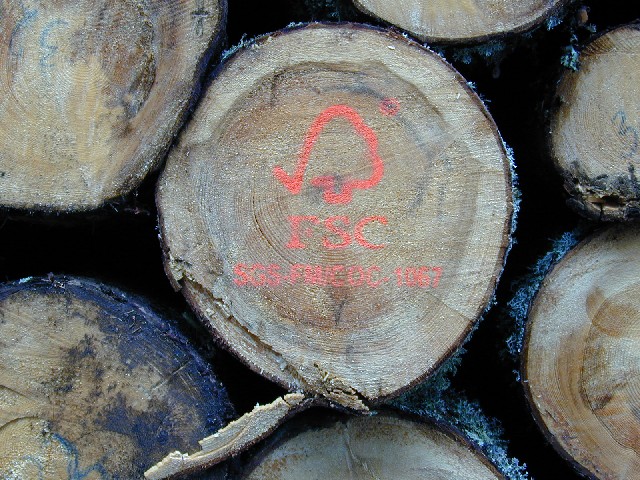
Holding a forest management certificate alone does not satisfy export buyers. Most major importers in Germany, Austria, the Netherlands, and the UK require chain-of-custody (CoC) documentation that tracks certified timber from the forest gate through processing and trading intermediaries to the final product. A sawmill purchasing certified logs from a forest management certificate holder must itself hold a valid CoC certificate if it intends to pass on the certified claim.
This creates a multi-step certification requirement that can present administrative challenges for smaller operators. Czech sawmill associations have periodically flagged the cost of annual audits — which run between CZK 15,000 and CZK 60,000 per facility depending on turnover and the certification body selected — as a barrier to entry for family-scale operations with fewer than five employees.
Despite these friction points, CoC certification among Czech processors has grown steadily. As of the early 2020s, estimates from sector bodies placed the number of FSC CoC certificate holders in the Czech Republic at over 300, with PEFC CoC numbers comparable. The concentration is highest in South Bohemia and the Vysočina Region, reflecting the geographic distribution of the main spruce and fir harvesting zones.
The Bark Beetle Crisis and Its Certification Implications
The bark beetle outbreak that struck Czech spruce forests from approximately 2017 onward created an unusual situation for certification. Large volumes of salvage timber — felled outside normal management plans in response to beetle-driven dieback — were subject to questions about whether salvage harvesting complied with certification standards, particularly FSC's requirements around planned felling volumes and environmental impact documentation.
FSC International and its Czech national office issued guidance acknowledging that emergency salvage operations could retain certification status provided they were documented in revised forest management plans and that the operator demonstrated continued intent to replant with diverse species mixes. Several large certificate holders in the Šumava foothills and Krušné hory regions updated their management documentation accordingly.
The volume of timber entering the market from the beetle crisis also had price implications for certified timber. With supply surging and domestic sawmill capacity strained, the premium typically associated with FSC-certified logs largely disappeared between 2019 and 2022. Buyers in export markets were still demanding certification documentation, but the volume available meant that certified timber attracted no meaningful price differential at the log stage during this period.
Procurement Policy and the Public Sector
Czech public procurement legislation does not currently mandate certified timber in construction contracts in the way that, for example, the UK Timber Procurement Policy or Danish government guidelines do. However, several municipal governments and regional authorities in South Bohemia and Moravia have introduced voluntary requirements for certified timber in public building projects, citing both sustainability commitments and reputational considerations.
The European Union Timber Regulation (EUTR), and its successor the EU Deforestation Regulation, places due diligence obligations on operators placing timber on the EU market — but for Czech timber, compliance with these instruments is generally straightforward given the country's established national legislation and certification infrastructure. The primary compliance burden for Czech operators falls on those importing timber from non-EU sources for processing and re-export.
Outlook for Czech Timber Certification
The trajectory for Czech timber certification points toward continued growth in certified area, particularly as reforested land following the beetle crisis matures into certifiable condition. Species diversification — with a shift toward oak, beech, larch, and pine alongside reduced spruce monoculture — will require forest managers to update their management plans, but does not in itself create a certification barrier.
Buyers in Central European markets are increasingly consolidating their supplier lists around certified sources, and the administrative infrastructure for certification audits in the Czech Republic is well-developed. The main variables affecting certification uptake over the next decade are likely to be audit cost pressures on small private owners and the speed at which replanted post-beetle areas reach harvestable maturity.
Sources: FSC International; PEFC Council; Czech Ministry of Agriculture forest statistics; Lesy ČR annual reports.

